
EN
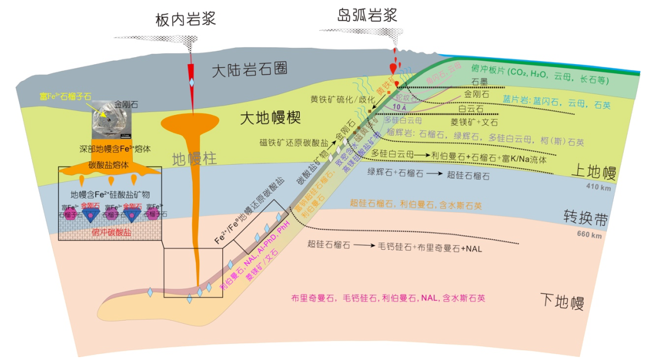
We investigate the coupled cycling of C, H, O, N, P, S and alkali elements (K and Na) in subduction zones and Earth's deep interior, focusing on volatile transport, mantle redox evolution, and elemental enrichment that govern deep mineralization and diamond formation.
研究深部C、H、O、N、P、S 及碱金属元素(K、Na)的耦合循环过程,揭示俯冲带挥发分迁移、地幔氧化还原演化及元素富集对成矿作用和金刚石形成的控制机制。
By integrating high-pressure experiments, natural sample investigations, and thermodynamic modeling, we reveal the coupled reactions of CHOS elements in subduction zones and demonstrate the critical roles of sulfidation, carbonate redox reactions, and alkali element cycling in deep diamond formation, ore-forming processes, and mantle evolution.
结合高温高压实验、天然样品和热力学模拟,揭示了C–H–O–S等生命元素在俯冲带中的耦合反应机制,阐明硫化作用、碳酸盐氧化还原反应及碱金属循环对深部金刚石形成、成矿过程和地幔物质演化的重要作用。
GCA 2026 The effect of iron sulfidation on the stability of the trisulfur radical ion S3− in subduction zone fluids
GCA 2025 An experimental investigation of the redox reactions between carbonates and pyrrhotite at high P–T conditions
CG 2026 High-pressure experimental constraints of carbonates + pyrite ± water interactions
EPSL 2024 K- and Na-rich davemaoite inclusion in diamond is not inherited from deeply subducted oceanic crusts
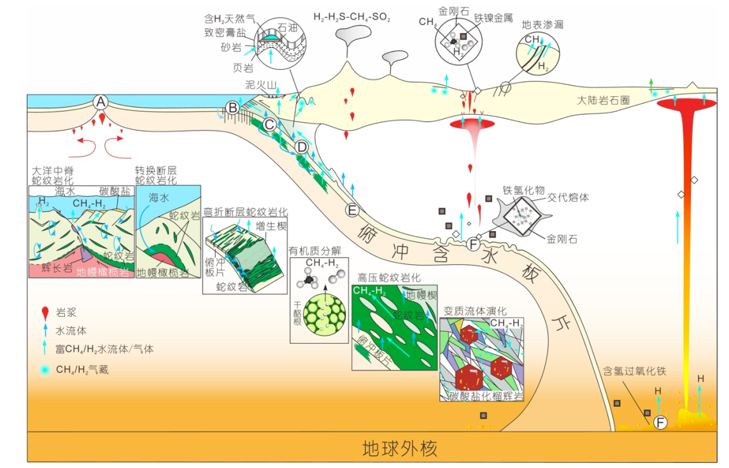
We investigate the formation mechanisms of abiotic H₂ and CH₄ under high-pressure and high-temperature conditions in subduction zones, and explore their implications for surface energy resources and the origin of the deep biosphere.
研究俯冲带高温高压条件下非生物H₂和CH₄的形成机制,探讨其对地表能源和深地生命物质起源的贡献。
By integrating natural sample investigations, high-pressure experiments, and thermodynamic modeling, we established a model for abiotic H₂ and CH₄ generation in subduction zones, constrained the P–T–fO₂ conditions favorable for CH₄ formation, and demonstrated that subducted oceanic crust represents an important source of abiogenic hydrogen and methane in Earth's deep interior.
结合天然样品、高温高压实验和热力学模拟,建立了俯冲带非生物H₂/CH₄形成模型,系统约束了CH₄生成的P–T–fO₂条件,并提出俯冲洋壳是地球深部非生物氢和甲烷的重要来源。
SC-ES 2026 Oceanic subduction zones: Factory of abiogenic hydrogen and methane
GCA 2025 Abiotic carbonaceous matter as a hidden deep carbon reservoir in the serpentinized forearc mantle wedge
GCA 2022 Favorable P–T–fO₂ conditions for abiotic CH₄ production in subducted oceanic crusts
GCA 2018 Formation of abiotic hydrocarbon from reduction of carbonate in subduction zones
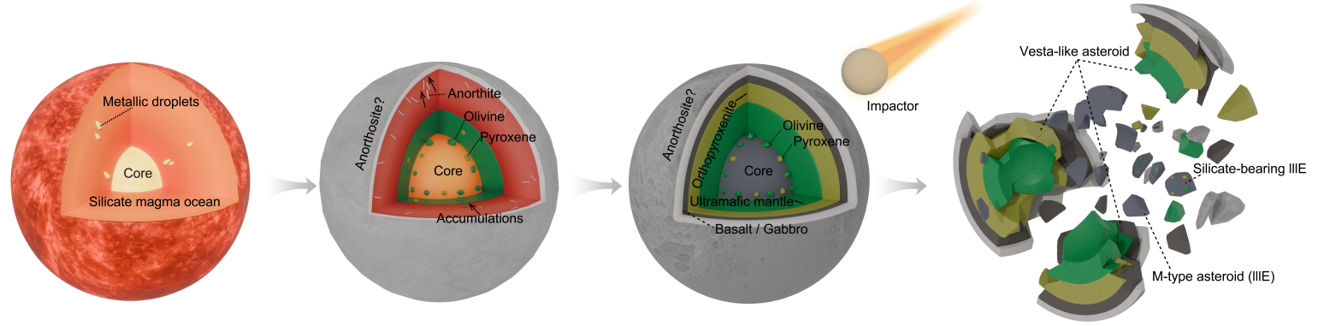
We investigate the occurrence, transport, and evolution of volatile and life-essential elements in planetary materials through the integrated study of returned lunar samples, meteorites, and high-pressure experiments, providing insights into planetary evolution and the evolution of Earth's habitability.
基于月球返回样品、陨石及高温高压实验,研究地外行星材料中生命元素及挥发分的赋存、迁移与演化过程,探索行星形成演化及地球宜居性演化机制。
Established the first genetic link between IIIE iron meteorites and HED meteorites, revealed the formation and preservation mechanisms of molecular water on the lunar surface, and constrained Si–S partitioning at Mercury's inner core boundary.
首次建立IIIE铁陨石与HED陨石成因联系;揭示了月球分子水的形成与保存机制;约束了水星内核边界 Si–S 元素分配行为。
arXiv 2026 Energetic space weathering generates and preserves molecular water on the lunar farside
CEE 2026 Genetic links between IIIE iron meteorites and the core of the HED parent asteroid
EPSL 2021 High-pressure experimental constraints of partitioning behavior of Si and S at Mercury’s inner core boundary
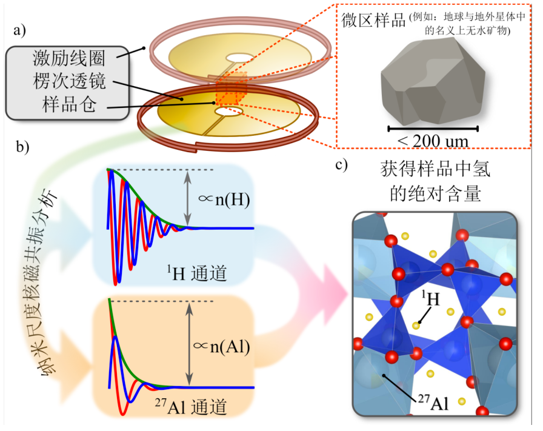
We develop high-pressure experimental apparatuses and advanced in-situ analytical techniques to provide new methods for studying Earth and planetary materials under extreme conditions.
开发高温高压实验装置及先进原位分析技术,为地球与行星材料在极端条件下的物理化学过程研究提供新的实验方法和技术支撑。
We have established micro-scale quantitative solid-state NMR, parallel DAC experiments and in-situ Raman pressure–temperature calibration, improving analytical precision and experimental efficiency.
建立了微区定量固体核磁共振、金刚石对顶砧平行实验技术及高温高压原位拉曼压力–温度标定等创新方法,显著提升了极端条件下样品分析的精度与实验效率。
NC 2024 Trace element detection in anhydrous minerals by micro-scale quantitative nuclear magnetic resonance spectroscopy
RSI 2022 Realization of parallel experiments in a diamond anvil cell and their application to water–mineral interactions at high pressure and high-temperature conditions
AM 2022 Raman shifts of c-BN as an ideal P–T sensor for studying water-rock interactions in a diamond-anvil cell


自由 Freedom
合作 Collaboration
顶尖 Excellence